
Dolly Parton: Her Health Journey, Caregiving, Aging and Lessons for Modern Preventive Medicine
Introduction: Remembering Dolly Parton Beyond the Rhinestones
Dolly Parton was much more than a country music superstar.
She was a singer, songwriter, actress, entrepreneur, philanthropist and one of the most recognizable personalities in the world. For generations, her music brought comfort, laughter and inspiration to millions of people. At the same time, her generosity created a legacy that reached far beyond entertainment.
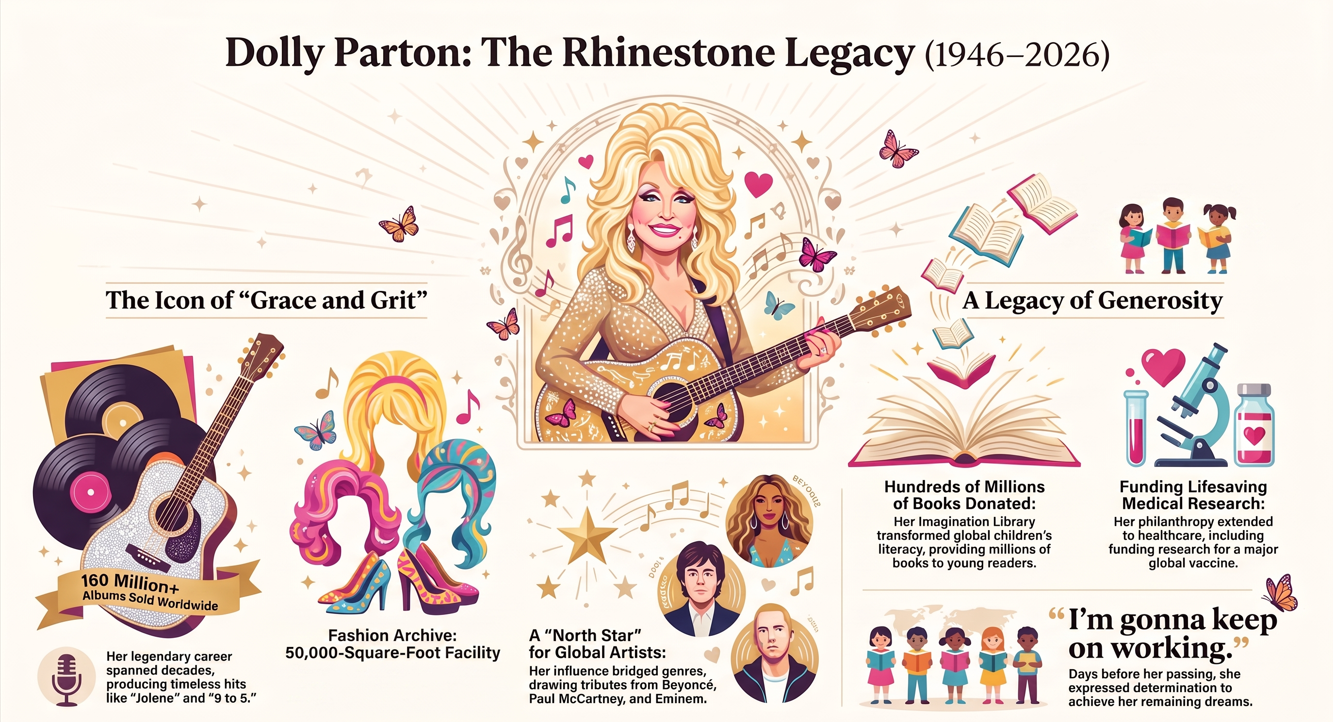
Sadly, Dolly Parton died on August 25, 2026, at the age of 80. Her representatives confirmed that she had faced a brief battle with cancer. The specific type of cancer was not publicly disclosed. She died at Vanderbilt-Ingram Cancer Center in Nashville, surrounded by loved ones.
Her death has understandably led many people to look back at her extraordinary life. However, it also gives us an opportunity to think about something much more important: our own health.
Dolly Parton’s public health journey included several challenges over the years. Reports before her death discussed kidney problems, autoimmune issues and other health difficulties. She had also spoken openly about periods when she neglected her own health while caring for her husband, Carl Dean.
Consequently, her story offers valuable lessons about preventive healthcare, caregiving, women’s health, aging and the importance of listening to your body.
At Interclinic, we believe that healthcare should not begin only when someone becomes seriously ill. Instead, good healthcare starts with awareness, regular assessment and early action.
After all, your body often gives you signals before a serious problem becomes obvious.
The challenge is recognizing those signals.
Therefore, Dolly Parton’s story is not simply about illness. It is also about resilience, responsibility and the importance of taking care of yourself while taking care of others.
Dolly Parton and the Power of Confidence
Dolly Parton became famous for her unmistakable appearance.
Her large blonde wigs, sparkling clothes, dramatic makeup and glamorous stage presence became part of her identity. Rather than hiding from criticism, she embraced her appearance and turned it into a powerful form of self-expression.
Interestingly, her wigs were not simply a fashion statement.
Dolly Parton was known for using wigs extensively because they helped her maintain her signature appearance while reducing the need to repeatedly style her natural hair. Her distinctive look eventually became one of the most recognizable images in popular culture.
That lesson goes beyond fashion.
Feeling comfortable with your appearance can influence confidence and emotional wellbeing. For some people, concerns about hair loss, skin changes, aging or other physical changes can affect how they feel about themselves.
However, aesthetic care should never replace medical care.
Instead, the two can sometimes work together.
At Interclinic, our approach to aesthetic medicine, dermatology and surgical care focuses on helping patients make informed decisions. We believe that appearance is personal. Therefore, the goal should not be to make everyone look the same.
The goal is to help people feel comfortable and confident in their own appearance.
Whether someone is concerned about hair loss, skin quality, signs of aging or another aesthetic issue, the first step should always be proper assessment.
After all, expensive treatments are not automatically better treatments.
A good treatment begins with understanding the person.
The Caregiver’s Dilemma: When Caring for Others Comes First
One of the most important health lessons associated with Dolly Parton’s later years concerns caregiving.
Dolly had been married to Carl Dean for nearly six decades before his death in March 2025. In a health update shortly before her own death, she acknowledged that she had experienced health problems that she had not paid enough attention to while focusing on caring for her husband.
This situation is far more common than many people realize.
Family caregivers often put everyone else first.
They organize medications. They attend appointments. They prepare meals. They manage household responsibilities. They provide emotional support. Sometimes, they do all of this while continuing to work.
Eventually, their own health appointments may become less important.
A small symptom becomes something to “check later.”
A routine health screening gets postponed.
Fatigue becomes normal.
Poor sleep becomes part of daily life.
Unfortunately, this pattern can continue for months or even years.
Caregiving itself is not the problem. Loving and supporting another person is deeply valuable. However, caregivers also need support and regular healthcare.
Chronic stress can affect sleep, mood, blood pressure, eating habits and overall wellbeing. Furthermore, prolonged stress may make it harder for people to maintain healthy routines.
Therefore, caregivers should remember one simple principle:
Taking care of yourself is part of taking care of someone else.
You cannot consistently support another person if your own health is deteriorating.
At Interclinic, we encourage caregivers to maintain regular medical assessments, even when life feels overwhelmingly busy. A health check does not need to wait until something feels seriously wrong.
Sometimes, prevention is simply making time for yourself.
Kidney Health: Why These Small Organs Matter So Much
Kidneys may be relatively small organs, but they perform several essential functions.
They help remove waste from the blood. They regulate fluid balance. They contribute to blood pressure regulation and help maintain the body’s chemical balance.
Because kidney disease can develop gradually, some people may have very few symptoms in the early stages.
That makes kidney health particularly important.
Recent reports concerning Dolly Parton described kidney and autoimmune issues before her final hospitalization. However, publicly available information does not establish the exact relationship between these conditions, and her specific medical diagnoses were not fully disclosed.
This distinction matters.
An autoimmune condition does not automatically mean that someone has kidney disease. Nevertheless, certain autoimmune diseases can affect the kidneys. Therefore, people with known autoimmune conditions may require appropriate monitoring depending on their diagnosis.
Kidney problems can also have many other causes.
High blood pressure, diabetes, certain medications, infections, dehydration and other medical conditions can affect kidney function.
Consequently, regular blood and urine testing can be useful when clinically appropriate.
Simple tests can provide important information about kidney function and other aspects of health.
Moreover, early identification gives doctors more opportunities to investigate the cause and manage potential problems before they become advanced.
At Interclinic, comprehensive health assessments can help identify risk factors and abnormalities that may otherwise go unnoticed.
The important message is simple:
Do not wait until you feel seriously unwell before paying attention to your kidneys.
Autoimmune Health: When the Immune System Turns Against the Body
Your immune system is designed to protect you.
It identifies and responds to harmful organisms and other threats. However, in autoimmune diseases, the immune system mistakenly attacks healthy tissues.
There are many different autoimmune conditions.
Some mainly affect one organ. Others can involve several systems throughout the body.
Symptoms can also vary significantly.
Fatigue, joint pain, skin changes, digestive symptoms and other complaints may occur in different autoimmune disorders. However, these symptoms can also appear in many other medical conditions.
That is why self-diagnosis is risky.
A person who feels constantly tired, for example, should not automatically assume that they have an autoimmune disease.
Instead, persistent or unexplained symptoms deserve proper medical evaluation.
Dolly Parton’s reported autoimmune health issues remind us that complex medical problems may not always be visible from the outside. A person can appear energetic, successful and active while dealing with significant health challenges privately.
Therefore, listening to your body matters.
If a symptom persists, changes or begins affecting daily life, speak with a qualified medical professional.
At Interclinic, our internal medicine approach focuses on looking at the whole patient rather than treating isolated symptoms in isolation.
The aim is to understand the bigger picture.
Women’s Health: Your Health Changes Throughout Life
Dolly Parton had previously spoken about significant health problems involving women’s health earlier in her life. Reports have described a difficult period in the early 1980s involving serious female health issues, weight concerns and chronic pain.
Her experience highlights another important point.
Women’s healthcare does not stop at one particular age.
Health needs change throughout life.
Reproductive health may be a major focus during younger adulthood. Later, hormonal changes and menopause can become more important. As women grow older, cardiovascular health, bone health, cancer screening, metabolic health and other issues deserve increasing attention.
Yet many women continue to tolerate symptoms for too long.
Pelvic discomfort may be dismissed.
Abnormal bleeding may be ignored.
Persistent fatigue may be blamed on a busy lifestyle.
Changes in weight may simply be attributed to aging.
Sometimes, these symptoms are harmless. However, sometimes they can indicate an underlying medical problem.
Therefore, persistent symptoms deserve proper assessment.
The goal is not to frighten women. Instead, the goal is to encourage informed healthcare decisions.
At Interclinic, women’s health is approached with professionalism, privacy and compassion. Depending on the individual’s needs, assessment may include medical history, physical examination, laboratory testing or appropriate imaging.
Treatment should always depend on the actual diagnosis.
Sometimes lifestyle changes are enough.
Sometimes medication is appropriate.
In other situations, a surgical procedure may be considered.
The key is finding the right solution for the right person.
Dolly Parton and Cancer: Why Early Detection Matters
Dolly Parton’s death has also brought cancer prevention and early detection back into public conversation.
Her representatives confirmed that she died following a brief battle with cancer. However, they did not disclose the specific type of cancer.
It is important not to speculate about her individual medical condition.
Instead, we can use the moment to discuss a broader healthcare lesson.
Cancer does not always cause obvious symptoms in its early stages.
Depending on the type of cancer, a person may feel completely normal for a considerable period.
That is one reason screening can be important.
However, cancer screening is not a single test that everyone should receive at the same age. Recommendations depend on factors such as age, sex, family history, personal risk factors and the specific cancer being considered.
For example, screening approaches may include tests for colorectal, breast, cervical or lung cancer in people who meet particular criteria.
Therefore, the best approach is individualized.
A doctor can help determine which screenings are appropriate.
At Interclinic, preventive healthcare focuses on identifying health risks before they become major problems. A comprehensive assessment may help doctors decide whether additional investigations or screening are appropriate.
The message is not “test everything.”
Instead, it is:
Know your risks. Know your recommended screenings. Do not ignore persistent symptoms.
Prevention becomes much more powerful when it is personalized.
Dolly Parton’s Contribution to Medical Research and Vaccination
Dolly Parton’s legacy extends beyond music and entertainment.
She also became associated with medical research and public health through her support for COVID-19 vaccine research. Her financial contribution helped support research connected with the Moderna vaccine development effort. Her broader philanthropic legacy has also included major support for literacy through the Dolly Parton Imagination Library.
This part of her story highlights the importance of medical research.
Modern medicine does not appear overnight.
New vaccines, medications, diagnostic tests and surgical techniques require years of scientific research, clinical studies and careful evaluation.
Vaccines work by preparing the immune system to recognize specific infectious threats. As a result, vaccination can reduce the risk of serious disease from particular infections.
However, vaccination decisions should still be individualized.
Age, medical history, previous vaccination, pregnancy status and other factors can influence recommendations.
Therefore, patients should discuss their vaccination needs with their healthcare professional.
At Interclinic, we believe that medical education is an important part of preventive care.
Patients should feel comfortable asking questions.
Why is this vaccine recommended?
What are the expected benefits?
What side effects might occur?
Is another vaccine or booster appropriate?
Clear answers allow people to make informed decisions.
Dolly Parton’s support for medical research reminds us that healthcare progress depends not only on doctors and scientists, but also on society’s willingness to support research and public health.
Aging Well: The Bigger Lesson From Dolly Parton’s Story
Perhaps the greatest lesson from Dolly Parton’s health journey is not about any single disease.
It is about aging with awareness.
Growing older does not mean giving up on health.
Instead, it means becoming more intentional about it.
As we age, the body changes.
Muscle mass can decrease. Bone health becomes increasingly important. Metabolic conditions may become more common. Cardiovascular risk can change. Sleep may change. Medications may accumulate. Recovery from illness may take longer.
Therefore, healthcare should evolve with you.
A health strategy that worked at 30 may not be appropriate at 60.
Similarly, a person who felt perfectly healthy last year may benefit from a new assessment after developing new symptoms.
This is where preventive medicine becomes valuable.
Regular health assessments can help establish a baseline.
Follow-up can identify changes.
Lifestyle adjustments can address risk factors.
Medical treatment can be introduced when necessary.
Furthermore, good healthcare is not only about adding years to life.
It is also about adding quality to those years.
The goal should be to remain as active, independent and comfortable as possible.
Your Health Should Not Always Come Last
Dolly Parton’s story carries an especially powerful message for people who spend their lives caring for others.
You may be looking after your spouse.
Perhaps you are raising children.
Maybe you are supporting aging parents.
You may be managing a business while caring for your family.
Whatever your situation, remember this:
Your health deserves a place on the calendar.
Do not wait until everyone else is taken care of.
There may never be a perfect time.
Instead, make your own health part of the routine.
Book the medical appointment.
Check the symptoms that have been bothering you.
Review your medications.
Discuss appropriate health screening with your doctor.
Pay attention to changes in your body.
Most importantly, do not feel guilty about doing these things.
Looking after yourself is not selfish.
It is responsible.
A Legacy That Goes Beyond Music
Dolly Parton leaves behind a remarkable legacy.
Her music crossed generations.
Her personality became instantly recognizable.
Her generosity touched countless lives.
Her Imagination Library expanded access to books for children, while her support for medical research demonstrated another side of her commitment to helping others.
Yet perhaps one of the most meaningful ways to remember Dolly Parton is to take something positive from her story.
Laugh more.
Love more.
Give more.
And take better care of your health.
Her final years remind us that even people who appear strong and energetic can experience complex medical problems.
Therefore, never assume that looking well means everything inside the body is perfect.
Health is something worth actively protecting.
Take the Next Step With Interclinic
At Interclinic, we believe modern healthcare should be personal, understandable and proactive.
You should not feel lost when discussing your health.
You should understand what your tests mean.
You should know why a treatment has been recommended.
Most importantly, you should feel comfortable asking questions.
Our approach combines medical assessment, preventive healthcare, internal medicine, women’s health, aesthetic medicine and surgical care according to each patient’s individual needs.
We do not believe that one health plan fits everyone.
Your age is different.
Your lifestyle is different.
Your family history is different.
Your goals are different.
Therefore, your healthcare should be different too.
Dolly Parton’s life reminds us that health can sometimes be complicated, even for people who seem incredibly strong.
That is why prevention matters.
Early assessment matters.
Listening to your body matters.
And taking care of yourself matters.
Dolly Parton spent her life bringing joy, confidence and generosity to others. Her passing is a sad reminder that none of us should take our health for granted.
So, while we remember the woman behind the rhinestones, the music and the unforgettable smile, let us also remember the deeper lesson.
Do not wait for your body to demand attention. Give your health attention today.
Because the best time to care about your future health is before a medical crisis forces you to.
At Interclinic, we are here to help you understand your health, identify potential risks and make informed decisions for the years ahead.
Your health is your most valuable long-term investment.
Protect it.
Understand it.
And give yourself the same care that you so willingly give to the people you love.