
The Nepal Flash Flood: Emergency Medicine, Surgical Triage and Public Health Lessons
Understanding the Nepal Flash Flood
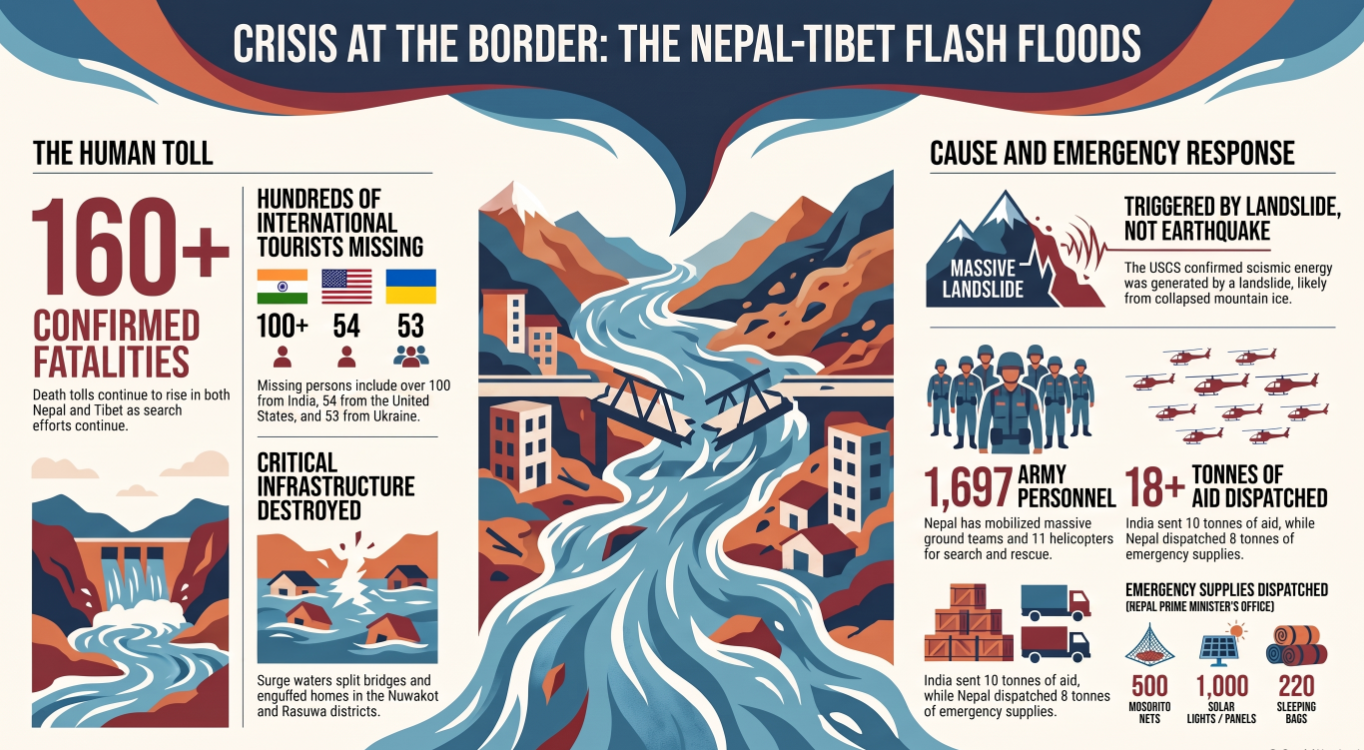
The Nepal flash flood was a devastating disaster that showed how quickly a mountain environment can become a life-threatening emergency. According to the source article, disaster struck the steep valleys near the Nepal-Tibet border on a Wednesday afternoon. A powerful wave of mud and water moved through mountain communities, leaving deaths, missing people, damaged homes and disrupted communication in its path. The scale of the event also created an international humanitarian challenge because the affected area was visited by tourists, pilgrims and local workers.
For Interclinic Medicine and Surgery Clinic, the Nepal flash flood offers an important opportunity to discuss a part of medicine that is often overlooked: disaster medicine. When a natural disaster happens, doctors do not simply treat one patient at a time in a normal clinic environment. Instead, they must make rapid decisions with limited information, difficult access, contaminated wounds and potentially overwhelming numbers of injured people.
Most importantly, the medical lessons are understandable even if you are not a healthcare professional. A flash flood can cause major trauma, drowning, crush injuries, fractures, hypothermia and contaminated wounds. At the same time, survivors may face problems with clean water, shelter, hygiene and access to medicines. Therefore, the response must continue long after the water stops moving.
What Made This Mountain Disaster So Dangerous?
At first, Nepalese authorities believed that an earthquake might have caused the flooding. However, analysis by the US Geological Survey indicated that the seismic energy was associated with a massive landslide. Nepal’s Department of Meteorology and Hydrology also provided information suggesting that a large mass of ice may have collapsed from a mountain, carrying rocks, soil and other heavy material with it.
As a result, the event was not simply a normal flood in which water gradually rises. Instead, the moving water was mixed with mud, rocks and other debris. That combination can create enormous destructive force. A person caught in such a flow may be struck, pushed, trapped or carried into structures and other obstacles.
From an emergency medicine perspective, this distinction matters. A debris-filled flood can produce high-energy trauma. For example, survivors may experience blunt injuries, fractures, deep wounds and crush injuries. In addition, contaminated water and sediment can enter open wounds, increasing the risk of infection.
Furthermore, a person can suffer serious injury even without an obvious external wound. A high-force impact may damage muscles, bones or internal organs. Therefore, medical teams need to look beyond the most visible injury when assessing someone rescued from a flash flood.
The Human Impact: Tourists, Pilgrims and Local Communities
The affected region described in the source article was an important destination for travellers and religious pilgrims. Several high-altitude sites attract visitors, including Lake Mansarovar near Mount Kailash in Tibet and Gosaikunda Lake in Nepal’s Rasuwa district.
Because visitors from different countries were present, the disaster created additional challenges for rescue and medical teams. People may speak different languages, have different medical histories and have different ways of communicating distress. Consequently, emergency teams need simple, standardized methods for identifying who needs urgent treatment.
The source article also described large numbers of people reported missing, including foreign tourists and local Nepalese citizens. These included people working in tourism, transport, security and essential services. Moreover, communications were severely disrupted in affected areas. Phones became disconnected, while families waited for information about loved ones.
For families, uncertainty can be almost as painful as the physical disaster itself. Therefore, disaster response should not focus only on injured bodies. It should also include communication, identification, family assistance and psychological support.
In a crowded emergency, doctors cannot always spend a long time taking a complete medical history. Instead, they must quickly assess breathing, circulation, mental status and obvious injuries. This process is known as triage. The purpose is not to decide whose life matters more. Rather, triage helps medical teams use limited resources where urgent treatment can make the greatest difference.
Search and Rescue in Difficult Mountain Terrain
Rescue operations after the Nepal flash flood faced a major geographical problem. Mountain valleys, damaged roads, mud, debris, bad weather and disrupted communication can make ordinary emergency transport extremely difficult.
According to the source article, Nepal deployed military personnel to support the response, while additional personnel remained available for further operations. Helicopters played an important role because some survivors were isolated in areas that ground teams could not easily reach. Ground teams also worked through mud and debris to find people who needed help.
However, helicopters cannot always fly when they are needed most. Thick fog, heavy rain and difficult mountain conditions can make aviation operations dangerous. Therefore, rescue planning must include alternatives rather than depending on a single method of transport.
For medical teams, delayed rescue creates another problem. An injury that might be manageable in a hospital can become much more serious when a patient remains trapped or isolated for hours. A wound can become contaminated. A person can become cold and dehydrated. A crush injury can also cause complications that require urgent treatment.
This is why disaster medicine starts before a patient reaches a hospital. Rescue teams, emergency physicians, nurses, surgeons and transport teams must work as one system.
Triage and the First Medical Assessment
Once survivors reach a medical facility, the first priority is rapid assessment and stabilization. The medical team needs to identify immediate threats to life before moving on to less urgent injuries.
Breathing is one of the first concerns. A person exposed to floodwater may have inhaled water or may have suffered chest trauma. Next, clinicians assess circulation and signs of serious bleeding. At the same time, they check mental status because changes in consciousness may indicate a serious head injury or another emergency.
After these immediate concerns, doctors examine the rest of the body for fractures, wounds, burns, crush injuries and other trauma. Because floodwater can hide dangerous debris, an apparently small wound should not automatically be considered harmless.
Moreover, medical teams need to consider the time between injury and treatment. In remote disasters, that interval can be much longer than in an ordinary road accident. Therefore, doctors must think about complications that develop over time, not just the original injury.
Crush Injuries and Rhabdomyolysis
One of the most important medical concerns after prolonged entrapment is crush injury. Heavy mud, rocks or structures can compress a limb for an extended period. When muscle tissue is damaged, the body releases substances from injured cells into the bloodstream.
A major complication is rhabdomyolysis, a condition in which damaged muscle releases myoglobin and other cellular contents into the blood. Severe rhabdomyolysis can contribute to acute kidney injury. Consequently, patients with significant crush injuries require careful medical assessment and monitoring.
Treatment depends on the patient’s condition and the extent of injury. Medical teams may provide intravenous fluids and monitor kidney function, urine output and other clinical findings. At the same time, doctors must assess for other complications of major trauma.
Importantly, crush syndrome is not something that should be managed through self-treatment. A person who has been trapped under heavy debris needs urgent professional medical evaluation, even if the limb initially looks intact.
Open Fractures and Contaminated Wounds
Flash floods can create an unusually dirty injury environment. Water may carry mud, soil, plant material and other debris. Therefore, an open wound created during a flood can become heavily contaminated.
Open fractures require urgent medical attention because the skin and soft tissue barrier has been broken. The risk of infection is significant, particularly when contamination is extensive. Medical teams may need to clean the wound, remove damaged or non-viable tissue and stabilize the fracture.
This surgical cleaning process is called debridement. In severe cases, patients may require repeated procedures depending on the condition of the wound. Doctors may also use antibiotics when clinically indicated.
The key point is simple: a deep or heavily contaminated wound should not be treated as an ordinary cut. Attempting to close such a wound without proper assessment can create problems. Instead, professional evaluation is important because hidden tissue damage may exist beneath the surface.
The Golden Hour and the Importance of Time
Emergency medicine often emphasizes the importance of early treatment after serious trauma. The idea is straightforward: the sooner life-threatening problems are identified and managed, the better the chance of preventing avoidable complications.
However, mountain disasters make the concept of rapid care much harder to achieve. A patient may be injured in a remote valley, separated from a road and surrounded by damaged infrastructure. Weather may delay helicopter operations, while debris may slow ground rescue.
Because of these barriers, disaster teams need to plan for prolonged pre-hospital periods. Basic stabilization at the rescue site can become extremely important. Keeping a patient warm, controlling external bleeding, protecting injured limbs and arranging safe evacuation can all influence the next stage of treatment.
Furthermore, hospitals receiving disaster victims need surge capacity. They may suddenly receive many patients at once, each with different injuries and different levels of urgency. Therefore, hospital preparedness is as important as field rescue.
Hypothermia: Why Warmth Can Be Medical Treatment
A flood survivor may be wet, exhausted and exposed to cold conditions. In mountain environments, this can become dangerous quickly. Hypothermia occurs when the body’s core temperature falls below the normal range.
For trauma patients, hypothermia is particularly concerning because severe cooling can interfere with normal clotting and contribute to worsening bleeding. Therefore, keeping injured people dry and warm is not simply a comfort measure. It can be part of medical stabilization.
Blankets, sleeping bags, dry clothing and sheltered spaces can therefore have real clinical value. At the same time, medical teams should continue to monitor patients for other causes of deterioration.
This lesson is useful beyond Nepal. During floods, storms or other emergencies, people often think first about food and water. Those needs are essential. However, warmth and protection from exposure can also be critical, especially for injured people, children and vulnerable individuals.
The Second Wave: Public Health After the Flood
When the immediate rescue phase ends, another challenge begins. Natural disasters can damage water systems, sanitation facilities, roads, electricity supplies and healthcare infrastructure. Consequently, public health risks can increase even after the floodwaters disappear.
Clean drinking water is one of the highest priorities. Floodwater can become contaminated with sewage, waste, soil and other materials. Therefore, communities need safe water sources and clear hygiene guidance.
Diarrhoeal disease is a particular concern after disruptions to sanitation and clean water. Public health teams need to monitor illness patterns so that unusual increases can be identified early. In addition, crowded shelters can make infection control more difficult.
Disease surveillance is therefore an important part of disaster medicine. It means collecting and reviewing health information to identify possible outbreaks or changing health threats. When medical teams detect a problem early, they can respond more quickly.
Furthermore, public health response should include access to essential medicines and appropriate preventive measures. The exact priorities will depend on the local situation, the diseases present, the affected population and available resources.
Shelter, Hygiene and Basic Supplies
Humanitarian aid is sometimes described as if it were separate from medical care. In reality, the two are closely connected. A blanket can help prevent dangerous exposure. Clean water can reduce disease risk. Lighting can help medical workers examine patients safely at night.
The source article described the distribution of blankets, sleeping bags, mosquito nets, solar lights and solar panels to affected communities. These items may look simple, but they can support basic health and safety during a crisis.
Lighting has an additional benefit. When electricity is unavailable, darkness can make movement, communication and medical assessment more difficult. Solar-powered lighting can therefore support both emergency services and displaced families.
Likewise, mosquito nets can help reduce exposure to mosquito bites in areas where mosquito-borne diseases are a concern. However, public health teams must always base prevention measures on the actual local disease risks rather than assumptions.
Psychological Support Is Part of Disaster Care
Physical injuries are only one part of a disaster. People who survive a flash flood may lose homes, possessions, livelihoods or contact with family members. Others may witness deaths or experience frightening moments during the event.
Families of missing people also face prolonged uncertainty. Consequently, psychological support should be included in humanitarian planning whenever possible.
Simple actions can help. Clear communication, safe shelters, access to family information and respectful treatment can give people a greater sense of stability. Moreover, healthcare workers should recognize that emotional distress can affect sleep, concentration and the ability to make decisions.
Disaster medicine therefore needs a broad view of health. Treating a fracture matters. So does helping a frightened family understand what is happening.
What the Nepal Flash Flood Teaches Healthcare Systems
The nepal flash flood demonstrates why healthcare preparedness cannot begin after disaster strikes. Hospitals and clinics need plans for sudden increases in patient numbers, communication failures and disrupted supply chains.
First, medical teams need clear triage systems. Second, they need emergency supplies that can be accessed quickly. Third, staff need training in trauma assessment and stabilization. Finally, facilities need reliable communication and referral pathways.
Interclinic’s perspective is that preparedness should be continuous. Medical professionals can strengthen their response capability by understanding trauma care, emergency triage and the challenges of providing care when normal infrastructure is disrupted.
At the same time, public education has an important role. Basic first-aid knowledge can help communities respond during the period before professional rescuers arrive. People should also understand when an injury requires urgent medical attention.
Building More Resilient Health Systems
A major disaster can expose weaknesses that are normally hidden. A road that seems reliable during normal conditions may become unusable after a landslide. A communication network may fail. A hospital may suddenly receive more patients than it normally handles.
Therefore, resilience means preparing for several problems at the same time. Healthcare systems need emergency plans, trained staff, supplies, backup communication and cooperation between agencies.
International cooperation can also be valuable when a disaster crosses borders or affects international travellers. Rescue operations, identification, medical care and communication may involve multiple governments and organizations.
Most importantly, preparedness is not only about responding to the next disaster. It is also about learning from previous events. Each major emergency provides lessons that can improve future planning.
Conclusion: The Medical Lessons of the Nepal Flash Flood
The Nepal flash flood was more than a story about moving water. It was a reminder of how quickly a natural event can become a complex medical and humanitarian emergency.
A debris-filled mountain flood can cause high-energy trauma, crush injuries, fractures and contaminated wounds. Meanwhile, delayed rescue can increase the risk of complications. After survivors reach safety, hypothermia, dehydration, infection and limited access to clean water can create additional challenges.
For that reason, effective disaster response requires more than ambulances and hospitals. It needs coordinated rescue, rapid triage, surgical care, infection prevention, safe water, shelter, communication and psychological support.
At Interclinic Medicine and Surgery Clinic, we believe that medical knowledge should be understandable and useful to the public. Understanding the health lessons of disasters can help communities recognize risks, prepare more effectively and seek appropriate medical care when emergencies occur.
Ultimately, the strongest health system is not simply the one that treats people well during ordinary days. It is the one that can continue protecting people when ordinary systems fail.
The Nepal flash flood reminds us that preparedness saves time, and time can save lives.